Demos
Demos  Colors
  Docs
Docs  Support





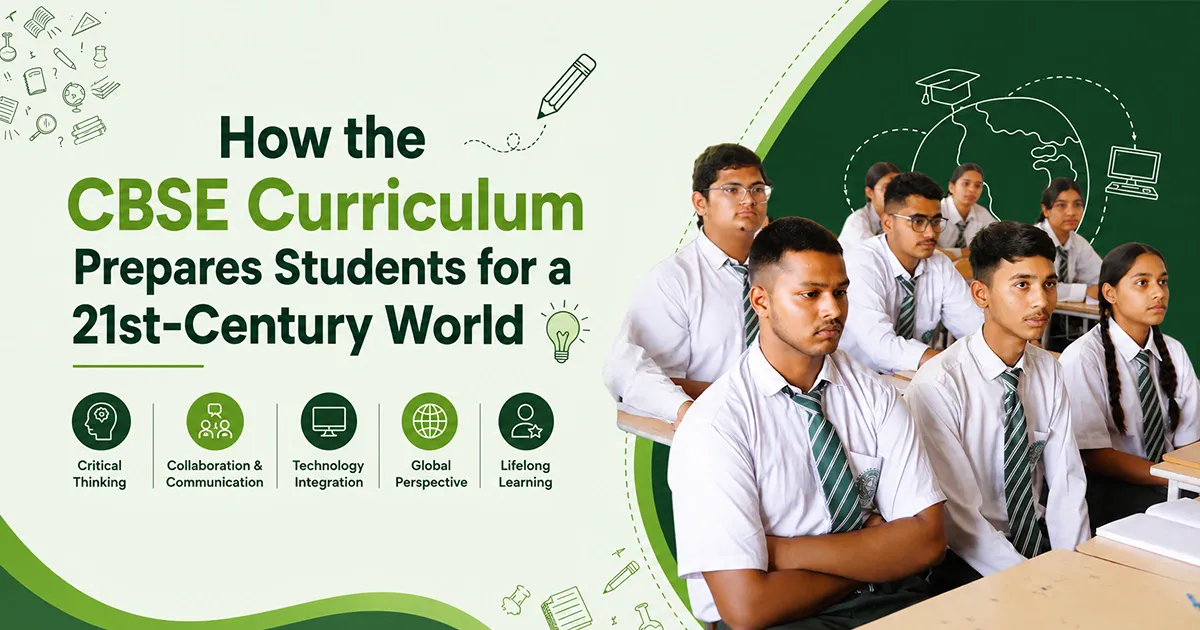
How Can a School Syllabus Keep Up With an Unpredictable Future?
Parents often ask if the equations and historical dates taught in classrooms actually help students when they enter the professional workforce. The modern job market changes faster than ever before because automation and intelligent software continue to replace routine desk jobs. If your child is studying in one of the CBSE schools in Dehradun, you need to know exactly how their daily lessons prepare them for these shifts.
The Central Board of Secondary Education does not just hand out textbooks for rote memorization anymore. Instead, the modern CBSE curriculum focuses on practical application to ensure that students can analyze facts rather than just repeating them during examinations. At Dhoon Bhawani International School (DBIS) in Ghammuwala, we observe how this structural framework alters the way children process information every day. Choosing the right educational path requires a clear understanding of how the board translates national policies into actual classroom activities.
What Does Competency-Based Education Look Like in the Classroom?
Many traditional schooling systems rely heavily on memory tests where students rewrite crammed facts onto an answer sheet and forget them the next day. The modern CBSE framework blocks this old method by using competency-based education as its core operational standard. This means the board designs exam papers to test how well a student understands a concept when applied to an unfamiliar situation.
If a student learns about compound interest in a mathematics class, the test will not merely ask for a standard formula calculation. The question might ask them to analyze two different bank loan offers to find the better financial option for a small local business. This approach directly builds 21st-century skills like critical thinking, data interpretation, and objective decision making.
In conventional memorization, there is a concentration on what to think through rote learning. Competency-based learning concentrates on how to think by applying knowledge in practice.
In requiring students to solve practical issues in their assignments every week, knowledge becomes functional because of its practicality. This practicality has become one of the reasons why parents look for the best CBSE schools in Dehradun for the purposes of higher education.
The Evolution of the Central Board: A Historical Context
To understand why these current changes matter, one must look at how secondary education has shifted in India over the decades. The old system was designed during an era when access to information was scarce. In that setting, the person who could remember the most facts was considered the most educated. Classrooms were structured around the teacher as the sole source of knowledge, lecturing from a fixed textbook while students took passive notes.
But the rise of the internet changed the value of raw information storage. Today, any smartphone can provide a student with historical dates, chemical formulas, or geographical statistics within seconds. The value of education has therefore shifted from knowing the data to evaluating the data.
The CBSE recognized this transition early and began restructuring its pedagogical guidelines long before the formal introduction of recent national policies. It began modifying its question paper patterns to reduce the weightage of direct, textbook-based questions. The introduction of case-based questions, source-based analysis, and assertion-reasoning problems was a deliberate move to phase out mechanical learning. For parents looking at CBSE schools in Dehradun, Uttarakhand, this means your child is entering an educational ecosystem that values cognitive flexibility over academic compliance.
The NEP 2020 Integration: Removing the Walls Between Subjects
The National Education Policy (NEP 2020) demanded a major overhaul in how Indian schools organize their subjects, and CBSE was the first board to implement these changes. Previously, a strict division existed between science, commerce, and arts streams after Class 10. A student focusing on physics could not easily study commercial accounting or classical music within their regular school hours.
The current NEP 2020 integration breaks these rigid boundaries down completely to offer greater academic flexibility. This structural shift matters because modern industries require professionals who understand multiple fields simultaneously.
Under the old academic structure, students were locked into a science stream only, a commerce stream only, or a humanities stream only. The modern NEP 2020 structure under CBSE allows a student to combine a core subject like physics with an elective like accountancy and a skill subject like financial literacy.
- Interdisciplinary Activities: Students integrate data science with environmental studies to monitor local weather patterns in the Doon Valley.
- Skill-Based Modules: The board offers short courses on coding, financial education, and artificial intelligence at an early level.
- Flexibility: Senior secondary students have the option to combine mathematics with history/economics according to their individual career requirements.
But this system only works if the institution has the physical labs and trained faculty to manage the flexible curriculum. DBIS combines these diverse subject areas by utilizing smart classrooms and digital tools, making it a reliable CBSE school in Uttarakhand for modern learning.
Learning by Doing: How Lessons Are Taught
The way teachers deliver lessons in a modern CBSE classroom focuses entirely on real understanding. Instead of starting a new chapter by writing definitions on the blackboard, teachers begin with a practical example or a real-life mystery.
This method is called experiential learning, which simply means learning by doing. Students look at a practical problem, talk about what they observe, and then learn the official formulas or textbook rules. This helps children connect their daily school lessons directly to the real world.
For instance, a chemistry lesson on rusting might begin with students examining actual rusted and clean metal objects right in the classroom. Instead of just copying notes from the board, the children talk about why the metal changed color and guess what caused it. Only after this hands-on discussion does the teacher introduce the formal science formulas. This simple method connects textbook symbols to the real world, turning the teacher into a helpful guide who leads discussions rather than a lecturer who just dictates notes.
Tracking Real Progress with CBSE Learning Goals
How do teachers make sure your child is actually learning instead of just memorizing facts to pass the week? The central board solves this by setting clear target goals for every single grade and subject. These goals act as a practical checklist for teachers, showing exactly what skills a student must master by the end of the term. Instead of guessing progress based only on a final exam score, educators use these metrics to track how well a child understands and applies their daily lessons.
Learning Outcomes & Real-World Benefits
| Subject Area | Expected Learning Outcome | Real-World Benefit |
| Sciences | Design a controlled experiment to isolate specific chemical variables. | Teaches the scientific method for objective problem-solving. |
| Mathematics | Construct and interpret statistical charts using raw local data. | Develops analytical skills for the financial and tech industries. |
| Languages | Draft a persuasive argument using verified evidence and clear logic. | Prepares students for corporate communication and public speaking. |
| Social Sciences | Analyze historical maps to find how trade routes shaped modern cities. | Cultivates spatial awareness and structural understanding of global economics. |
So, the lesson plans are no longer left entirely to the personal choices of an individual teacher. The school matches every classroom lecture against these official board metrics to guarantee uniform quality across all sections. This strict quality control framework explains why CBSE day schools in Dehradun, like DBIS, maintain a high reputation for consistency.
Assessment Shifts for Building 21st Century Skills
The means by which a school evaluates its students will influence the style of study a student develops. If the examination requires that students memorize long passages, then that is how students will spend their evenings. This is why the CBSE has carefully changed its evaluation templates to ensure a behavior change.
The share of competency-focused questions in board examinations has risen steadily. These questions take the form of real-world scenarios, data charts, or short case studies. A student cannot answer them by simply memorizing the text at the back of the chapter. They must read the provided situation, identify the underlying academic principle, and synthesize a unique solution.
Traditional board exams allocated roughly half the marks to direct definitions and a large portion to long essay memory. Modern CBSE board exams look very different, dedicating most of the evaluation to case-based scenarios and practical application tasks while minimizing pure memory text.
This change trickles down to internal school assessments as well. Unit tests and terminal examinations at DBIS copy this national format to ensure that students are comfortable with analytical thinking from an early age. This methodical preparation reduces exam anxiety because students learn to rely on their understanding rather than their memory during high-stakes evaluations.
Holistic Student Development: The Co-Scholastic Balance
A student with perfect academic scores might still struggle in the professional world if they lack collaboration skills or emotional resilience. True holistic student development requires a school to treat physical education, creative arts, and ethical training with the same seriousness as core sciences. The CBSE pedagogical framework scores these areas through continuous co-scholastic assessments instead of ignoring them during finals.
The holistic development model treats mental agility, physical stamina, and ethical grounding as equally important pillars. Mental agility is built in smart classes and labs. Physical stamina comes from regular sports and events like the Khel Mahakumbh. Ethical grounding is cultivated through structured activities like the Scouts and Guides camp.
At DBIS, this balance is visible in how the weekly timetable operates for all age groups. A student might spend two hours resolving a complex calculus issue in the morning, and then spend the afternoon working in a team on the basketball court. The school also incorporates traditional yoga practices and structured social work to build a strong sense of community responsibility. Participating in competitive regional events, like the Ranipokhri ‘Khel Mahakumbh’, teaches children how to handle both success and failure constructively.
The Role of Technology in Modern Classrooms
Digital tools are no longer just an optional addition to the school building. The current CBSE curriculum framework expects technology to be deeply woven into the daily delivery of lessons. This does not mean simply replacing a textbook with a PDF file on a tablet screen. True digital integration involves using specialized software and interactive platforms to make complex, abstract concepts visible and measurable.
In a geography class, instead of looking at flat, two-dimensional maps of mountain ranges, students use digital mapping software to explore the topography of the Doon Valley in three dimensions. In physics, virtual labs allow students to run simulated experiments with variables that would be dangerous or impossible to replicate physically in a standard school laboratory, such as altering gravitational constants or simulating particle collisions.
Passive technology use means just projecting a textbook chapter onto a screen for reading. Active technology use means using interactive software to run real-time simulations where students can change the variables themselves.
By interacting with these digital systems, students develop a natural comfort with advanced technology. They do not just learn how to consume content on a screen; they learn how to use digital platforms to solve problems, analyze data patterns, and present their findings clearly. This preparation is vital because almost every modern profession requires a high level of digital fluency and technical comfort.
Teacher Training and Professional Development
A modern, forward-thinking curriculum is only as good as the teachers who implement it in the classroom. Recognizing this dependency, the CBSE has made regular professional development mandatory for all educators working within its affiliated network. Teachers are required to complete a specific number of training hours every year, focusing on modern pedagogical methods, assessment design, and student well-being.
These training sessions ensure that teachers stay updated with the latest research in cognitive science and child development. They learn how to identify different learning styles within a single classroom, how to create fair and balanced evaluation rubrics, and how to use digital tools effectively without distracting from the core lesson.
At Dhoon Bhawani International School, this focus on continuous training is a core part of the institutional culture. Our faculty members regularly participate in board-conducted workshops to refine their teaching styles. This continuous learning cycle ensures that our instructional methods remain aligned with national standards, providing students with a modern and highly effective educational experience.
Addressing the Mental Well-being of Students
The transition to a highly analytical and competitive educational framework can sometimes create pressure for young minds. The modern CBSE framework addresses this challenge by integrating student well-being directly into the institutional structure. Mental health and emotional resilience are no longer viewed as separate issues; they are treated as essential components of academic success.
The curriculum includes specific guidelines for life skills education, stress management, and peer counseling. Schools are encouraged to create open communication channels where students can express their challenges without fear of judgment. This supportive environment helps students develop a healthy relationship with learning, viewing mistakes as opportunities for growth rather than academic failures.
- Regular Counseling Support: Access to trained professionals who can guide students through academic and personal challenges.
- Life Skills Workshops: Dedicated sessions focusing on time management, emotional regulation, and conflict resolution.
- Inclusive Peer Culture: Group activities designed to foster empathy, mutual respect, and collaborative problem-solving among classmates.
By prioritizing emotional health alongside intellectual growth, the modern framework ensures that students develop the psychological stamina required to face real-world challenges. This balanced approach creates confident individuals who are prepared to handle the complexities of higher education and professional environments.
Why the Choice of School in Uttarakhand Matters for Your Child
The curriculum provided by the central board is identical across the country, but the way a school delivers that curriculum alters the final result. Many institutions pack their classrooms with fifty or sixty students, making it impossible for a teacher to offer personalized guidance. When classes are overcrowded, the advanced competency-based questions become difficult for struggling students to comprehend.
Dhoon Bhawani International School addresses this specific issue by maintaining an optimized student-teacher ratio in every wing. Because our classrooms are not crowded, educators notice immediately when a student misinterprets a foundational concept. This individual attention allows the faculty to adjust their daily teaching pace based on real-time classroom feedback. If you are exploring options among CBSE schools in Dehradun, Uttarakhand, the local infrastructure and class size should be your primary evaluation points.
Choosing the Right Path
The modern school journey is no longer a simple race to score ninety-nine percent through mechanical repetition. The global workforce requires young adults who can adapt to new digital tools, communicate clearly across teams, and solve unstructured problems. The current CBSE framework provides the blueprint for this style of education, but the school campus turns that blueprint into a reality.
Visiting the campus at Ghammuwala allows you to see these modern pedagogical methods in action. Look at the laboratory setups, check the student work on display, and observe how the teachers interact with the children. Your choice of institution will decide whether your child spends their school years memorizing old answers or learning how to ask the right questions.
Frequently Asked Questions (FAQs)
Traditional testing asks students to define terms or recall specific dates directly from the textbook chapters. Competency-based questions present a new problem scenario and ask the student to use their conceptual knowledge to find a logical solution.
Yes, the syllabus aligns directly with the national competitive exam frameworks. Because the board focuses on deep conceptual clarity rather than surface learning, it builds the exact foundation needed for advanced entrance exams.
The board encourages IT-integrated learning to make abstract concepts visible. Schools use smart boards, digital simulations, and computer laboratories to help students interact with the material practically.
For younger classes, the focus shifts entirely to play-based and experiential learning. The school removes the pressure of formal examinations in the earliest years to focus on language development and physical coordination.
Yes, under the updated guidelines, schools can offer combinations that cross traditional stream boundaries, allowing a student to pair sciences with humanities or commerce subjects depending on their unique career goals and interests.
Continuous assessment spreads the evaluation process across the entire academic year through projects, presentations, and short quizzes. This reduces the intense pressure of a single final exam and provides a more accurate map of a student's real progress.
The co-scholastic system evaluates essential life skills, physical fitness, and artistic talents. It ensures that a child's unique personal strengths outside of traditional textbooks are recognized and valued as part of their official school record.
Related Posts

The Long-Term Benefits of Sports for Students and Academic Growth
How well this mistaken ideas off denouncing pleasure & praisings will give you complete.
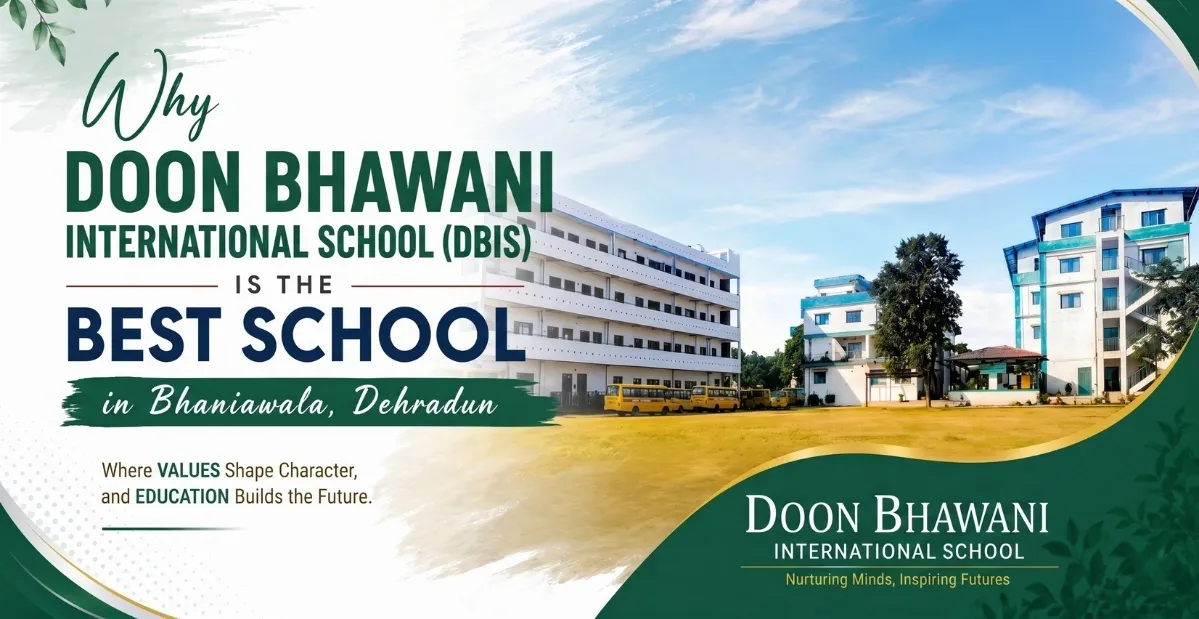
Why Doon Bhawani International School (DBIS) is the Best School in Bhaniawala, Dehradun
How well this mistaken ideas off denouncing pleasure & praisings will give you complete.
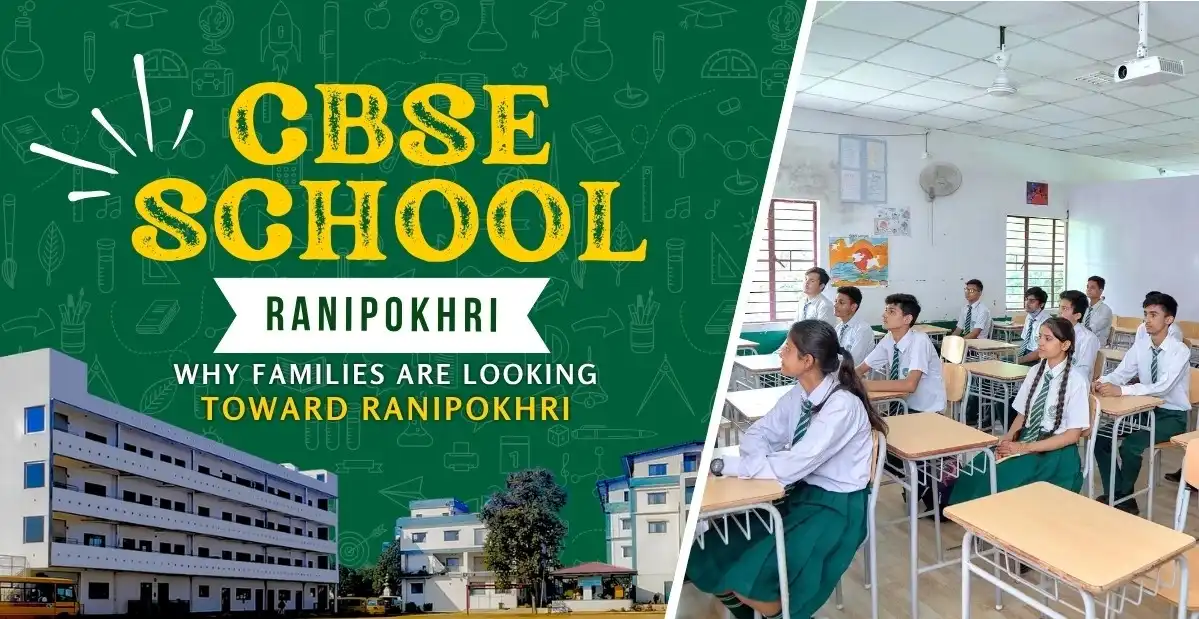
Best CBSE School Ranipokhri : Why Families are Looking Toward Ranipokhri
How well this mistaken ideas off denouncing pleasure & praisings will give you complete.

Choosing the Best CBSE School in Dehradun: What Makes DBIS Stand Out?
How well this mistaken ideas off denouncing pleasure & praisings will give you complete.